
Agentic AI Comparison:
Agent Analytics AI vs Autonomous Field Mapper
 vs
vs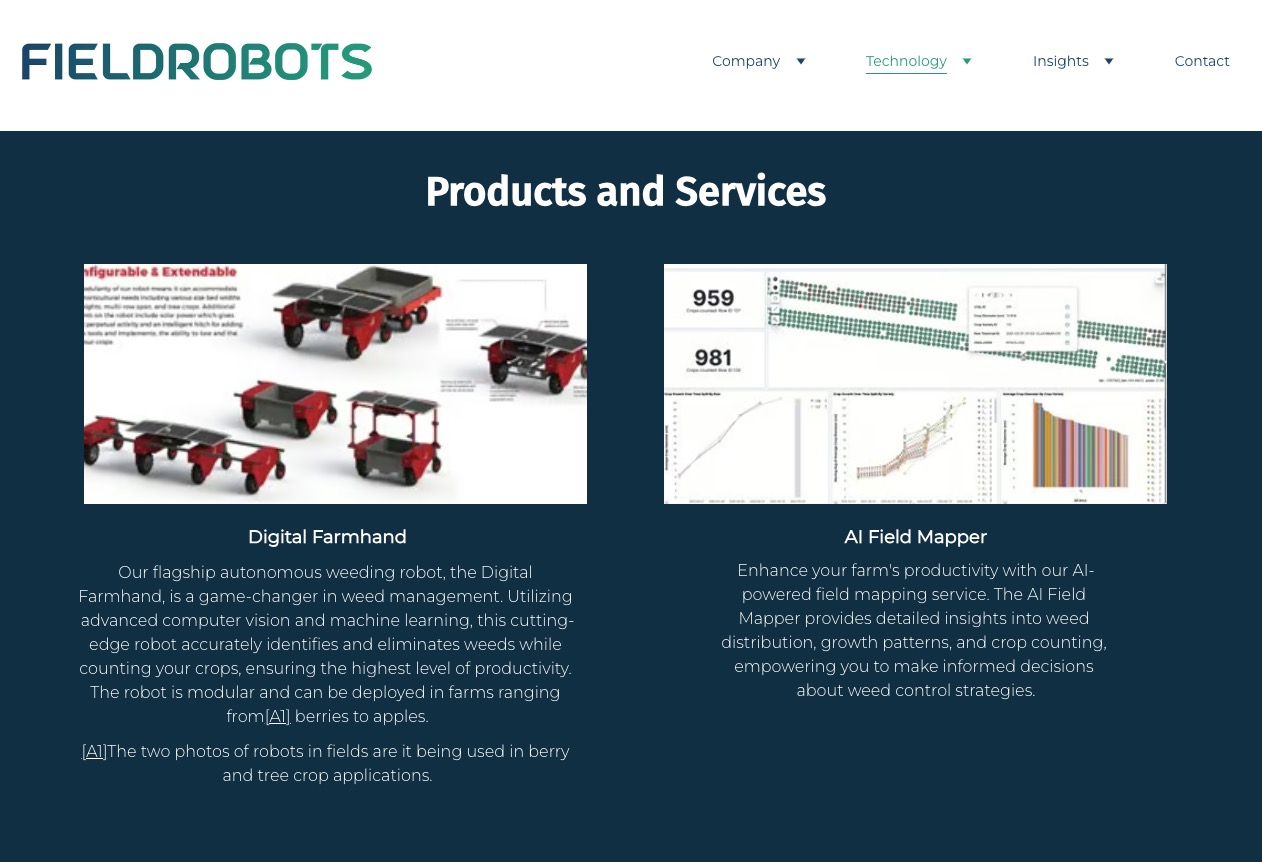
Introduction
This report provides a structured comparison between Autonomous Field Mapper (as a class of agricultural/terrain-mapping robotics solutions leveraging autonomous navigation and sensing) and Agent Analytics AI (a SaaS platform that analyzes agent interactions, productivity, and customer communications) across the metrics of autonomy, ease of use, flexibility, cost, and popularity. The comparison is contextual: Autonomous Field Mapper refers to autonomous field mapping robotics and technology used primarily in agriculture and industrial field surveying, while Agent Analytics AI refers to a cloud-based analytics platform focused on call center and support agent performance, customer conversations, and workflow intelligence. Because these offerings operate in very different domains (physical robotics vs. data/analytics SaaS), scores are normalized within a broad, cross-industry perspective rather than direct feature-to-feature equivalence.
Overview
Autonomous Field Mapper
Autonomous Field Mapper represents autonomous agricultural field-mapping robots and related technologies that use GPS, LiDAR, cameras, and other proximity sensors to autonomously navigate farm fields, collect spatial and visual data, and build maps for precision agriculture and operations. Typical systems combine mobile robots/UAVs with photogrammetry or SLAM (simultaneous localization and mapping) algorithms to generate high-resolution maps of crops, soil conditions, obstacles, and terrain. These systems emphasize autonomy in navigation and data collection, enabling large-area coverage with reduced manual labor, and are often deployed on farms or industrial sites to support decisions about planting, spraying, resource allocation, and hazard detection.
Agent Analytics AI
Agent Analytics AI is a software platform that ingests and analyzes contact-center and customer-facing agent data (e.g., call logs, conversation transcripts, CRM events) to provide performance analytics, coaching insights, and operational intelligence for support, sales, and service teams. It focuses on aggregating omnichannel interaction data, applying AI to measure productivity, sentiment, and outcomes, and surfacing dashboards and recommendations that improve agent efficiency, customer satisfaction, and management decision-making. The product is delivered as a cloud-based service, generally integrated with existing telephony, ticketing, or CRM systems, and is designed for ease of deployment and use by operations leaders and analysts rather than requiring specialized robotics or mapping expertise.
Metrics Comparison
autonomy
Agent Analytics AI: 7
Agent Analytics AI provides workflow and analytical autonomy rather than physical autonomy: it automatically ingests interaction and agent data from connected systems, applies AI models to classify, score, and interpret conversations, and surfaces insights and dashboards without requiring manual reports or ad hoc analysis for each interaction. The platform likely automates routine analytics tasks (e.g., performance metrics, trend detection, issue flagging) and may support automated alerts or recommendations. However, its autonomy is constrained to data processing and decision support within digital workflows, and it still depends on human configuration, interpretation, and operational decisions. In a cross-domain comparison, this level of automated data handling and insight generation is solid but not as fully autonomous as physical robots navigating and mapping complex environments, so a score of 7 reflects strong but primarily analytical autonomy.
Autonomous Field Mapper: 9
Autonomous Field Mapper technologies in agriculture and industrial field surveying are designed explicitly for high degrees of physical autonomy: robots or UAVs conduct navigation, localization, and mapping with minimal human intervention, relying on GPS, LiDAR, cameras, and proximity sensing to build maps and avoid obstacles. Research on autonomous field mapping and operation highlights that localization and mapping are core functions for mobile field robots, enabling them to traverse large areas and continuously collect data without direct teleoperation. In advanced deployments, systems can cover hundreds or thousands of acres per day with automated mission planning and data capture, which places their physical autonomy near the top of current technology capabilities. For this reason, they are scored at 9, indicating very strong autonomy in real-world motion, sensing, and mapping tasks.
Both offerings rely on AI to reduce manual work, but Autonomous Field Mapper exhibits higher autonomy because it performs end-to-end physical navigation and mapping in real-world environments with minimal human control, whereas Agent Analytics AI automates data analysis and reporting within software workflows but does not act autonomously in the physical world.
ease of use
Agent Analytics AI: 8
Agent Analytics AI, as a cloud-based analytics platform, is designed for business users, operations leaders, and analysts, typically providing web dashboards, configurable reports, and integrations with existing call-center or CRM tooling. SaaS analytics products in this category focus on minimal deployment friction, guided onboarding, and out-of-the-box metrics that non-technical users can understand quickly. Because it works entirely in the digital domain with familiar UI patterns (charts, tables, KPIs) and avoids hardware setup or field operations, the practical barrier to entry is lower than for robotics and mapping tools. Users can interact with the system via browser-based interfaces and leverage built-in AI models without needing to manage sensors or vehicles. Therefore, ease of use is relatively high compared to complex field robotics, and it is scored at 8.
Autonomous Field Mapper: 6
Autonomous field mapping robots and UAV solutions typically require specialized setup and domain expertise: operators must configure missions, understand sensor payloads (e.g., cameras, LiDAR), manage flight or drive paths, and often interpret geospatial outputs via GIS or photogrammetry software. While modern systems aim to simplify operation through mission planners and user-friendly interfaces, the complexity of hardware deployment, safety, maintenance, and data processing remains significant. Reports on field mapping emphasize that successful use demands knowledge of mapping parameters, environmental constraints, and data-processing workflows. Consequently, for non-specialist users, ease of use is moderate: the systems are usable but involve a learning curve, on-site procedures, and sometimes regulatory considerations, leading to a score of 6.
In terms of user-facing simplicity, Agent Analytics AI is easier to use, focusing on browser-based dashboards and integrations for business users, while Autonomous Field Mapper solutions involve hardware deployment, mission configuration, and geospatial data interpretation that demand more technical and operational expertise.
flexibility
Agent Analytics AI: 8
Agent Analytics AI provides flexible analytical capabilities across multiple business scenarios involving agents and customer interactions: it can be used for performance measurement, coaching insights, quality assurance, customer sentiment analysis, and operational optimization in support, sales, or service environments. Within its focus area, it is adaptable to different team sizes, industries, and data sources via integrations with various contact-center and CRM platforms. The platform’s AI models and dashboards can often be configured to match different KPIs, segments, or workflows, offering broad flexibility in how organizations structure and consume insights. While it is specialized to agent-related analytics, that scope spans many businesses and use cases. Compared to physical field robots, software analytics can typically be repurposed more easily for new questions or data slices, which supports a higher flexibility score of 8.
Autonomous Field Mapper: 7
Autonomous Field Mapper technologies offer notable flexibility in environmental and application use: they can be deployed for various agricultural tasks (crop monitoring, weed detection, terrain mapping) and industrial field surveys, and may support different sensor payloads, mapping resolutions, and mission profiles. Research on autonomous mapping in agriculture underscores that ground robots and UAVs can be customized with diverse sensors and algorithms to adapt to different crops, field layouts, and operational objectives. However, flexibility is bounded by physical and regulatory constraints (terrain accessibility, weather, safety requirements) and by the fact that these systems target a specific domain—field mapping—rather than general business analytics or other digital tasks. As a result, they are flexible within their vertical (agriculture/field operations) but not broadly across unrelated workflows, leading to a score of 7.
Both systems are flexible within their respective domains, but Agent Analytics AI has broader flexibility in terms of organizational use cases and data-driven questions across many industries, whereas Autonomous Field Mapper is highly configurable in sensors and missions within agriculture and field operations but more constrained to that physical mapping domain.
cost
Agent Analytics AI: 7
Agent Analytics AI, as a SaaS analytics product, usually follows a subscription pricing model based on seats, usage, or data volume. This structure avoids heavy upfront hardware investment and distributes costs over time, making entry more affordable for many organizations. Compared to buying and maintaining robots and specialized sensors, licensing a cloud analytics platform is typically less capital-intensive and easier to scale up or down. Operational costs mainly involve license fees, data integration, and user training, which are relatively modest for organizations already running contact-center or CRM systems. While high-volume deployments or advanced features can increase expenditure, the overall cost profile is more favorable than deploying autonomous robotics infrastructure, so the cost metric is scored at 7.
Autonomous Field Mapper: 5
Autonomous field mapping solutions generally involve substantial upfront and operating costs: hardware such as ground robots or UAVs, high-resolution cameras or LiDAR, GNSS equipment, and specialized software for photogrammetry or mapping represent significant capital expenditures. Maintenance, field operations, spare parts, and potential regulatory compliance also add ongoing costs. While automated field mapping can reduce labor expenses and improve decision-making—potentially yielding long-term savings—the initial barrier for smaller farms or organizations can be high, especially compared to purely software-based services. Academic and industry discussions on autonomous mapping stress investment in robotics platforms and sensor suites as a prerequisite, which lowers the relative cost score to 5 when assessed against typical SaaS offerings.
From a total cost of ownership perspective, Agent Analytics AI is generally less expensive to adopt and scale because it is software-only with subscription-based pricing, whereas Autonomous Field Mapper solutions require investment in robots/UAVs, sensors, and specialized mapping software plus ongoing maintenance. Consequently, Agent Analytics AI scores higher on cost efficiency for most organizations.
popularity
Agent Analytics AI: 7
Agent Analytics AI operates in the call-center and customer-service analytics space, which is a more established and widely adopted software category. Organizations across sectors invest in tools that measure agent performance, customer satisfaction, and operational metrics, and AI-powered analytics platforms have seen strong uptake as part of digital transformation initiatives. While specific market penetration and brand recognition of Agent Analytics AI relative to major incumbents are not quantified here, its solution type—cloud-based agent analytics—is broadly aligned with mainstream SaaS trends and can be adopted by many companies without major hardware investments. As a result, in a cross-domain comparison, its potential and likely popularity among business users is somewhat higher than that of specialized autonomous field mapping robots, leading to a score of 7.
Autonomous Field Mapper: 6
Autonomous field mapping is an emerging but still relatively specialized field within precision agriculture and industrial surveying. Academic literature and industry initiatives show growing interest and experimental deployments of ground mobile robots and UAV-based mapping systems. However, widespread, mainstream adoption is still developing, with many solutions in pilot or early commercial phases and primarily used by larger or technologically progressive agricultural operations. Compared to mass-market software tools, these systems remain niche, limited by capital requirements, expertise needs, and domain specificity. Their popularity within agritech and robotics communities is significant, but general market penetration across all industries is moderate, supporting a score of 6.
In terms of mainstream adoption potential, Agent Analytics AI benefits from operating in a widely recognized SaaS analytics segment with broad applicability to contact centers and customer operations, while Autonomous Field Mapper solutions are popular within precision agriculture and robotics circles but remain relatively specialized and capital-intensive for the broader market.
Conclusions
Autonomous Field Mapper and Agent Analytics AI serve fundamentally different domains—physical field robotics versus digital agent analytics—yet both leverage AI to reduce manual work and improve decision-making. Autonomous Field Mapper excels in physical autonomy and rich environmental data capture, making it highly valuable for large-scale precision agriculture and field operations despite higher cost and complexity. Agent Analytics AI, in contrast, offers greater ease of use, flexibility within business workflows, and more accessible cost and adoption profiles, fitting well into existing contact-center and CRM ecosystems and supporting a range of performance and customer-experience use cases. For organizations focused on optimizing agricultural field management and spatial data, Autonomous Field Mapper-type technologies are more appropriate; for those seeking to enhance agent productivity and customer interaction quality, Agent Analytics AI is the more suitable choice. The metric scores reflect these differing strengths and trade-offs, emphasizing that selection should be driven by operational context, technical capacity, and strategic priorities rather than a purely numeric comparison.
The best framework is the one that finishes your task tomorrow too.
Run OpenClaw or Hermes with saved memory, monitored restarts, clear costs, and the messaging channel you already use.
Plans start at $29/month. Cancel anytime.
Hosted agent
OpenClaw or Hermes